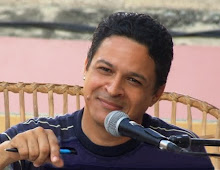
Rolando
Diaz is a man of islands. He is a man of roads. He is a man of cinema. In these
circumstances he has been submerged in many ways.
The
filmLos pájaros
tirándole a la escopetais like an amulet
under his skin; but his devotion for the cinema did not stop there; no
stinging, or distance has stopped him. The past, the present emerge from his
own creator threads…
If
taking a look at his work as a documentary filmmaker, screenwriter and
director, to the stage of the creative groups formed in Cuban cinema, what
works and what colleagues would you keep?
They
were contradictory years, but with a lot of creative illusion. My approach to
Tomás Gutiérrez Alea, greatly enriched my way of seeing cinema and life.
Rocinante Group is something I never forget, especially my deeper bond with
Juan Carlos Tabio and Rapi Diego -my preferred within the Creation Group,
without ever leaving my brothers in Cuban cinema; Daniel Díaz Torres and
Fernando Perez who belonged to another group. I want to highlight the important
role played by the then president of the Cuban Film Institute (ICAIC by its
Spanish acronym), Julio García Espinosa, promoter of the Creation Groups.
The
film that characterized that era wasAlice in WonderlandVillage, which though was not made by my group, but Daniel
Diaz’s, shook the foundations. It received a brutal attack -the word is not
exaggerated, by an official position very distant from ours.
It
was terrible what arose around that witty story, and resulted in the union of
the filmmakers and almost all ICAIC workers “Who killed the Commander?
Fuenteovejuna, Lord … “Such was the spirit of that time although the official
rejection to the film then prevailed over the desire of filmmakers and film
workers … But ICAIC remained. That was an achievement.
A
film likeLos Pajaros tirándole a la escopeta(1984), beyond its comedy
status, is in my view a demonstration of its ability to appropriate the Cuban
wit and from there, to dialogue with society. How much has this film given to
you over time? Have you bothered being associated too much with this title?
At
best and worst sense,Los Pajaros…is
something ubiquitous in my life. Not a single day goes by in which someone to
remember it me. Even those who once vilified it now recognized it. It was a
walk through elements of Cuban identity. But I am quite aware that it was not a
great movie. However, it’s been 30 years and it is still there.
In
that sense, it hurts me a lot that other part of my work is not valued, it is
censored, just few talk about it or is shown with limitations in Cuba. I s tart
the tour withMelodrama,
more scathing and irreverent that the
aforementioned film and that has been ignored by ICAIC. The average Cuban is
unaware of its existence. Perhaps it is too late to make room for it. If at the
time it had been exhibited without limitation, it would occupy another place in
the collective memory of Cuba,
and perhaps Los Pajaros …would have had to share its reference with this other
title.
I
continue withSi me
comprendieras, even more ignored thanMelodrama. It is a docudrama with a strong impact outside Cuba, but it
was exhibited very few here. We know it’s weird that documentaries to be
massively acclaimed by viewers, but perhaps, without implying any artistic
comparison, if it had had the opportunity to have an exhibition like Suite Habana, excellent movie by my friend Fernando Pérez, things would
have been different.
How a
creator of your experience reconstructs and feels Cuba from its immediate environment
and from himself, even if he is far from the island?
Cuba, the country as a nation, has never
been separated from me. I stopped to identify it only as a Revolution: I see it
as a country of all Cubans, and when I say all, I mean it in its most inclusive
sense. From this reflection I madeActresses, Actors, Exile,
a tour on icons of Cuban cinema who live outside the island; but who do not
cease feeling it, because it also belongs to them. In the 21st century it is
absurd to ask if a Cuban is from inside or outside.
The
subject of exile is recurrent in your work in recent years. After those looks,
how does the exile mark a creator and a human being? How much does it enrich
you?
Nostalgia
never abandons those who left Cuba.
Neither those who profess to be farther from Cuba and its reality are far apart
from Cuban topic as they say. What happens is that there are always those who
seek to identify the nation with political ideas of one sign and that is where
everything goes wrong.
The
films I have made with Cuban issue have a difficult insertion. By having no
Cuban nationality, by being made outside Cuba, they are works that have no
country, become stateless products that usually remain in limbo. Inscribe them
in Festivals is complicated. Often countries have laws that do not allow them
to assign nationality of where they were made.
Therefore,
I prefer to make films that touch indirectly related topics all Cuban Diaspora. Cercaniaor the documentaryActresses, Actors, Exile,
tell stories in which Cubans are directly involved. What would have happened if
at the timeCercaniahad been normally displayed in Cuba? What could have been the fate
of a film that I’m sure would have had “impact” in Cuban movies? Then it is
worth wondering whether the Cuban people would know me only byLos Pajaros…
I
know thatCercaniawalks the country among the famous “packages” or rented
copies of poor quality. I know it; but it saddens me thatCercaniaand other
proposals have to be viewed that way, never having gone through commercial
cinemas.
InCercania he characters go from one end to the other of political
ideas. Those who inhabit these poles express their views without restrictions,
but the family, friendship, tolerance joins them. In the end all the characters
end up understanding, accepting each other. I’m not giving an assessment that
does not correspond to me; I only made clear my purposes.
Los
caminos de Aissais
a docudrama with more universal looks, but that does not stop hiding our
absences, loneliness or the presence of differences. It is represented by an
African woman who needs to be European and not to be alone, who needs to be
admitted despite being black and Go-Go ballerina in a society that accepts her;
but of which she, nevertheless, is not part. These experiences are acquired by
living outside the usual environment and enrich us towards to be more universal
beings. It is a spiritual gain of great magnitude.
The
character of Rolando Diaz is not the same inLos Pajaros tirandole a la Escopetathan that ofSi me
comprendieras, film made in Cuba, but
already living abroad. It is not the same the one ofCercania or La vida segun Ofelia-a
fully Spanish film – and the one considering the emigrant pain inEl largo viaje de Rustico
orLos caminos de Aissa.
You
win and lose with those experiences … but honestly I think I’ve matured, I’ve
grown up working for my own company, imagining and jumping many obstacles in the
real world, and living-at the end, what I learned to do in Cuba.
How
do you remember your participation in the Workshop of Film Critics, in Camagüey
in this same year and which are your projects right now?
I
have very fond memories. I felt really good and well respected. I only
disagreed with the way the national press reported my presence at the event and
that was not the responsibility of the organizers. I was awarded the Critics
Prize and the National Television Newsreel and other media elaborated the news
so that it seemed I was still living in Cuba.
I
wrote an explanatory note that has not been disclosed by the official media. I
think it is a need to extend the debate on this and other issues vital to the
future of the nation. Juan Antonio García Borrero immediately published the
note in his recognized blog Cine Cubano: La pupila insomne which can be viewed at:
In
these moments I live in the Dominican
Republic. I did very well in the Canary
Islands; but life gave one of its unexpected twists and I landed in the Caribbean. Here I rearmed my life and I have two new
projects underway. I live surrounded by Cubans; they are inevitable for me,
although the issues of future projects, at least for now, do not involve them
directly.
I
will attend the Festival of Havana this year.Los
caminos de Aissawill be displayed there
and while I can, I will be present to talk with my natural spectators: Cubans.
Luckily I had an independent life outside Cuba, I don’t have to explain my
decisions to anyone, and that makes me happy, because hate does not encourage
me but proximity.
Taking from
ON CUBA
Article in Spanish: ROLANDO DÍAZ,
cineasta cubano: “En el siglo XXI es absurdo preguntar si un cubano es de
adentro de afuera de la Isla”
A Zenón lo esperan cada día a la puerta de su
casa en el reparto Sueño. Vienen de la ciudad, del oriente, de cualquier parte.
Todos quieren ponerse en sus manos.
Tomó
la tijera por vez primera en Manhattam, adonde había ido a pasar una temporada
con sus tíos Margarita y Benito. Como barbero y peluquero regresó a la Isla en 1959. ¡Qué año! Tenía
apenas diecisiete y desde entonces comenzó su leyenda.
La
clientela vino sola, afirma; pero la verdad es que el joven había comenzado a
derramar su duende por doquier y, poco a poco, su estilo devino marca de
calidad. Zenón es capaz de leer el menor ademán en el bisel. El corte y arreglo
del cabello nunca ha sido su medio de vida. Es antes, una filosofía, un
sacerdocio.
A
finales de los ochenta, integró el equipo Cuba a la Copa de la Amistad que reunió en La Habana a los mejores
estilistas del otrora campo socialista. En2004, recibió el Premio Juan Gómez, instituido para los mejores
especialistas de su tipo por la obra de la vida. El documentalMito de
un estilo (Pedro Rodríguez Méndez, 2008) lo retrata entero.
Su paso
como profesor en la Escuela
de Peluquería, en Quisquella y Praga es inolvidable. Hubiera podido tener el
salón más lujoso de Santiago de Cuba, pero ha preferido entregar sus
conocimientos a manos llenas, sin guardarse nada, sin esperar mas recompensa
que la fidelidad a la profesión.Sangre
gallega y vasca corre por sus venas; pero Cuba es su irrenunciable
aliento.
—“Yo no
soy restaurador”, contestó con su habitual sinceridad ante una solicitudinusitada, difícil; pero una vez que se vio
rumbo al mítico poblado de El Cobre, se le borraron las dudas.
Mano
divina
En1982,
la imagen de la Virgen
de la Caridad
de El Cobre se sometió a una restauración, encabezada por el especialista
Francisco Figueroa Marrero. Que acogierana Zenón en el equipo, no fue obra de azar.
Le
impresionó ver la imagen frente a él ―confiesa—. Pequeña, hermosa, morena,
única, con unas varillas de la cintura hacia abajo. Contempló el pelo
apelmazado, compacto. El tiempo había hecho lo suyo… y el estilista supo qué
caminos tomar.
Debía
cubrir dieciocho centímetros de circunferencia. Las hebras fueron trenzadas en
forma de cortina. Con primoroso cuidado fue confeccionada la nueva peluca, con
primoroso cuidado la depositó en la sagrada cabeza. Escogió cabello humano de
color castaño y con ciertas ondulaciones. Tampoco fue casualidad.
El
artista lo había atesorado para una ocasión especial. Ninguna mejor que esta.
No solo era hermoso y se mantenía en excelentes condiciones, sino que debía ser
fiel a su espíritu, a la mixtura de su pueblo, a su distinción.
“Cachita”, como le llaman familiarmente a la Patrona de Cuba, exhibe el
cabello de una cubana de estos tiempos.
El
acontecimiento podría ser la corona de cualquier carrera. Está referido en el
libroLa Virgen de la Caridad del Cobre, símbolo
de cubanía, de la doctora Olga Portuondo
Zúñiga; mas Zenón Vizarro San Miguel se lo ha tomado con calma, con discreción.
Cuando
la gente de a pie, se detiene un instante a saludarle bajo el sol santiaguero;
cuando alguien repara ensu trabajo, Zenón
no tiene palabras para agradecer, ni manos para apretar.
—Ese es
mi verdadero premio, asegura.
Yo
le creo.
Nota:
*Juan
Gómez fue el primer cirujano-barbero nombrado por el Cabildo de la Villa de La Habana en 1552. En esos
tiempos, el corte de cabello y el oficio de dentista solían descansar en la
misma persona. El premio fue estimulado por proyecto ArteCorte (La Habana Vieja)
encabezado porel emprendedor Gilberto
Valladares, “Papito”.
One day I no
longer had anything to cook with, or where to look for firewood. Maria Cureaux
moved around her apartment. Her mambi ancestors, her French-Haitian ancestors
moved. The board appeared as a lifeline. The next morning, she looked slyly at
a chair that was loose. Wood looked good…
At the makeshift kitchen with two bricks and
a small balcony on the third floor, the whole dining set, and the bed burned
and she even emptied the bookcase. The Decameron and The Lady of the Camellias
served to soften the peas.
Two little cans of rice, twice as much water
and the effect of the miracle of getting steam fill the pot. It was an
emergency procedure known as microjet rice. Maria Cureaux Savigne says it with
an overwhelmed smile. Now she can, but in the early nineties; with four
children to care for and a husband working away, she was in no mood for some
hilarity.
The so-called “special period” came at the
time after the fall of the socialist bloc and the disintegration of the Soviet Union. The economy bottomed out. Cuban ingenuity
shot sky-high.
Maria Cureaux became an expert. When there
were no shoes, she found a few pieces of inner tubes that cut and seeped to
measure. Upon returning from her night shift, she washed her face and sat at
her Singer sewing machine. Faithful and undefeated. From there came footwear
for the family … and for others.
She had to take advantage of sunlight. The
only bulb at home was moved from the kitchen to the living room to the bedroom:
a two-way journey. It became little more than a cult. It was worth admiring the
delicacy with which she removed and turned to tighten; but everything started
to become useless in the long blackouts.
The allergy of the children complicated
everything, but Maria Cureaux did not know how to surrender. She skipped the
log line to get kerosene, and had to cope with a honeycomb made candles, burners fed with some edible oil, castor oil, glitter hair,
anything she could lay her hands on.
Like many others, she rediscovered the
maguey. The plant came out of humility to stardom. Its fleshy leaves and
whitish substance replaced the soap … until one evening when Maria´s hands got
swollen.
There is still time to explain how she
seasoned the grounded beef with banana skin, how she turned the curtains into
dresses, how…
Maria Cureaux lives in the Rajayoga
neighborhood in Santiago de Cuba
and has seen their children grow up with pride. She tried to explain everything
with indulgence, almost tenderly. And while rocking her pounds, there is a
flash I cannot decipher, a burning in her eyes that I fail to understand
Article in Spanish: El Año en que nos comimos los muebles
Un día ya no había con qué cocinar, ni dónde buscar leña. María
Cureaux se revolvió en su apartamento. Se revolvieron sus ancestros mambises,
sus ancestros francohaitianos. La tabla de planchar se le apareció como tabla
de salvación. A la mañana siguiente, miró con picardía una silla que estaba
floja. La madera parecía buena…
En aquella cocina
improvisada con dos ladrillos y en el pequeño balcón del tercer piso, ardió
todo el juego de comedor, una cama, y hasta se vació el librero. El
Decamerón y La dama de las camelias sirvieron para ablandar los
chícharos.
Dos laticas de arroz,
el doble de agua y el efecto del vapor conseguían el milagro de llenar la olla.
Aquel procedimiento de emergencia se conocía como arroz microjet.
María Cureaux Savigne lo dice con una sonrisa desbordada. Ahora puede, pero a
principios de los noventa; con cuatro hijos a su cuidado y un esposo que
trabajaba lejos, no tenía ánimos para hilaridad alguna.
El llamado “período
especial” sobrevino en esa época tras la caída del campo socialista y la
desintegración de la
Unión Soviética. La economía tocó fondo. El ingenio del
cubano se disparó.
María Cureaux se volvió
experta. Cuando ya no hubo zapatos, se procuró unos pedazos de cámaras de
neumáticos que cortaba y calaba a la medida. Al regresar de su guardia
nocturna, se lavaba el rostro y a dar pedal en su máquina Singer. Fiel
e invicta. De allí salieron calzados para la familia… y para la calle.
Había que aprovechar la
luz solar. El único bombillo de la casa iba de la cocina a la sala, de la sala
al cuarto: un viaje de ida y vuelta. Se transformó en poco menos que un objeto
de culto. Era de admirar, el primor con que se quitaba y se volvía a enroscar;
mas todo empezó a tornarse inútil ante los largos apagones.
La alergia de los hijos
lo complicaba todo, pero María Cureaux no conocía la rendición. Se ahorró la
larga cola del queroseno, y tuvo que arreglárselas con unas velas fabricadas de
panal, con unos mecheros alimentados de aceite comestible, aceite de ricino,
brillantina para el pelo, lo que apareciera.
Como tantos otros,
redescubrió al maguey. La planta salió de la humildad al estrellato. Sus
hojas carnosas y su sustancia blanquecina sustituyeron al jabón… hasta una
tarde en que las manos de María salieron inflamadas.
Todavía hay tiempo para
explicar cómo aderezaba el picadillo de cáscara de plátano, como convirtió las
cortinas en vestidos, como…
María Cureaux vive en
el Reparto Rajayoga en Santiago de Cuba y ha visto crecer a sus hijos con
orgullo. Intenta explicarlo todo con indulgencia, casi con ternura. Y mientras
mece sus libras, hay un destello que no descifro, un ardor en su mirada que no
alcanzo.
I screamed loudly at ArmandoMestreSportsPalace, in Santiago de Cuba, in 1983. I shouted again
and the stands seconded the claim in a chorus:
–We want Mamita!!!
A call to the legend: Mercedes ¨Mamita¨
Pérez , member of the world champion team in 1978. The women’s volleyball match
between Cuba and United States
was being dominated by the visitors thanks to the excellence of their players.
Mamita´s magic was needed urgently.
The northern sextet had in its ranks the
giant Flora Hyman, the short Rita Crocker, the efficient Debbie Green … The
setter drew the ball in the air and the court trembled after every American
spike. The previous year, at the World Cup in Peru, they had won the bronze
medal; but their rise had not stopped. Cuba was facing , perhaps, the best
team in the world.
Eugenio George, the Cuban coach, announced a
change. Now Mamita is going to play, I thought… but instead of Mercedes Pérez,
the player who appeared in the court was an inexperienced sixteen-years-old
girl, not even very tall, with an unknown name: Mireya Luis.
Spellbound by the game I was witnessing,
nothing on her impressed me. I did not know seeing the strategy or the
generational renewal and I booed her, almost viciously.
I left the SportsPalace convinced that a medal at the
Pan American Games in Caracas
-in August of that same year- would be difficult to reach. In addition to United States,
the Peruvian girls also have a very strong team, with the lefty Cecilia Tait
and central blocker Gaby Perez del Solar.
The Venezuelan capital was a battle. The
stellar veteran Imilsis Téllez was still the Cuban setter. Mireya made her
debut in style. Cuba
managed to get to the title discussion. The 3-2 win over the formidable
American squad came out of all odds. I still remember the hugs, the jumps.
Cuba
did not attend 1984 Olympics in Los Angeles
-following most countries of the then socialist block; but in the next
universal championship at Czechoslovakia,
in 1986, it would prove its progress.
Mireya was news. A few weeks ago, she had
become a mother and her participation was not assured. Would she still own her
fabulous strength in the jump and attack? The question hung in the air, but she
took care of clear them. I could not believe it when I saw her coming from the
bench. I cried so much in front of the TV screen that the shouts must have been
heard in the very center of Europe.
Cuba did not attend the 1988
Olympics, again. The 1989 World Cup was a revenge for girls that could not be
tested in Seoul.
They climbed to the top of the podium. Mireya was chosen as the best spiker and
was part of the ideal team of the tournament. She repeated that condition in
the most demanding events.
The history of Cuban Volleyball is known
(glorious history). The women’s team was dubbed The Spectacular Dark-skinned
Girls of the Caribbean and they won three consecutive Olympic Games: Barcelona 92, Atlanta 96
and Sydney 2000.
I particularly remember another of their
success such as the World Cup in Brazil in 1994. The Cuban players
won all matches without losing a set; including the final against the host. The
matches between them were train crashes; but the game of the Caribbean
athletes silenced the local public support.
An expert said that the Cuban squad had
become a “machine” of playing volleyball. Mireya was the locomotive.
In China, “Luis” became queen. Her
name opened all doors. Each of her points was echoed. She enjoyed playing and
infected her teammates. When the team resented, she put character. A “scoopful”
by Mireya used to be the perfect remedy. And no one dared to steal her an
individual award, not risking the Chinese public -usually calmed- to invade the
court.
Mireya Luis is one of the athletes with
greatest record in the history of Latin American sport and a living legend of
universal volleyball. Charismatic and respected, after her retirement, she
joined the Athletes Commission of the International Olympic Committee and is
currently helping to the development of beach volleyball in Cuba.
Now that there are Caribbean spikes in many
teams in the world, and other Cuban girls playing volleyball got a bronze medal
at the Central American and Caribbean Games in Veracruz, my mind flooded with memories of
thirty years ago.
I owe
Mireya an apology; an excuse with rigor. You do not witness the birth of a star
every day.
Article in Spanish: El día que chiflé a Mireya Luis
Grité. Grité
estentóreamente. Ateneo Deportivo Armando Mestre, Santiago de Cuba, 1983. Volví
a la carga. Las gradas se revolvieron ante el reclamo, me secundaron en un
coro:
—¡Que salga Mamita!!!
Un llamado a la
leyenda: Mercedes Mamita Pérez, integrante del equipo campeón del
mundo en 1978. El tope de voleibol femenino Cuba-Estados Unidos se inclinaba a
la excelencia de las visitantes. Hacía falta su magia, con urgencia.
El sexteto norteño
contaba en sus filas con la gigante Flora Hyman, la pequeña Rita Crocker, la
eficiente Debbie Green… La pasadora dibujaba en el aire la esférica y el
tabloncillo temblaba, pelota abajo. El año anterior, en el Mundial de Perú,
habían ganado el bronce; pero su ascenso no se había detenido. Cuba tenía
delante, tal vez, al mejor equipo del orbe.
Eugenio George anunció
un cambio. Ahora sí viene Mamita, me adelanté… pero en vez de Mercedes
Pérez, ocupó el tabloncillo una chiquilla inexperta de dieciséis años, ni
siquiera muy alta, con un nombre desconocido: Mireya Luis.
Embebido en el juego
que se desarrollaba ante mis ojos, nada en ella me impresionó. No supe ver la
estrategia, ni el renuevo generacional. Y la chiflé, casi con saña.
Del Ateneo santiaguero
salí convencido de que una medalla en los Juegos Panamericanos de Caracas —en
agosto de ese propio año— sería difícil. Además de las norteamericanas, las
chicas peruanas iban con todo, con la zurda Cecilia Tait al frente.
La capital venezolana
fue una batalla. Todavía la veterana Imilsis Téllez mantenía sus manos
prodigiosas en el pase. Mireya hacía su debut a lo grande. Las criollas se las
arreglaron para llegar a la discusión del oro. La victoria 3-2 sobre el
formidable combinado de Estados Unidos, sobrevino fuera de todo pronóstico.
Todavía recuerdo los abrazos, los saltos.
Cuba no asistió a la Olimpiada de Los Ángeles
1984 —siguiendo a la mayoría de los países del entonces campo socialista—; pero
en la siguiente cita universal de Checoslovaquia en 1986, probaría su
adelanto.
Mireya fue noticia.
Unas semanas atrás, se había convertido en madre y su participación no era
segura. ¿Podría alcanzar aquel su despegue fabuloso? ¿Conservaría su remate?
Las preguntas flotaban en el aire, pero ella misma se encargó de despejarlas.
No podía creerlo cuando la vi salir del banco. Grité tanto frente a la pantalla
que tiene que haberse escuchado en el mismísimo centro de Europa.
La Mayor de las
Antillas se ausentó de los Juegos Olímpicos. Otra vez. La Copa del Mundo del 1989 fue
el desquite para las chicas que no se pudieron probar en Seúl. Subieron a lo
más alto. Mireya fue escogida como la mejor rematadora e integró la selección
ideal. Esa condición la repitió en los más exigentes eventos.
La historia del
voleibol cubano es conocida. Historia gloriosa. El equipo femenino fue
bautizado como Las Espectaculares Morenas del Caribe y se
acreditaron tres campeonatos olímpicos consecutivos: Barcelona 92, Atlanta 96 y
Sydney 2000.
Fuera de esos predios
recuerdo particularmente el Campeonato Mundial de Brasil en 1994. Las cubanas
ganaron todos los partidos sin perder un solo set; incluida la final con las
anfitrionas. Los partidos entre ellas eran choques de trenes; pero el juego de
las antillanas silenció una barra auriverde, cerrada y en contra.
Un experto declaró que
la selección de Cuba se había convertido en una “máquina” de jugar voli. Mireya
era la locomotora.
En China, “Luis” se
convirtió en reina. Su nombre abría todas las puertas. Cada punto suyo era
coreado. Disfrutaba su juego y contagiaba al resto. Cuando el equipo se
resentía, ponía carácter. Una “cucharada” de Mireya, solía ser el remedio
perfecto. Y nadie se atrevía a escamotearle algún premio individual, para no
correr el riesgo de que el público chino —normalmente calmado―, se lanzara a la
cancha.
Mireya Luis es una de
las deportistas de mayor palmarés en la historia del deporte latinoamericano y
una leyenda viva del voleibol universal. Carismática y respetada, integró
después de su retiro, la
Comisión de Atletas del Comité Olímpico Internacional y
actualmente es protagonista en el desarrollo del voleibol de playa en Cuba.
Ahora que hay remates
caribeños en muchos equipos del mundo, que otras chicas del voleibol cubano
consiguieron un disputado bronce en los Juegos Centroamericanos y del Caribe de
Veracruz, mi mente se inundó con recuerdos de hace treinta años.
A Mireya le debo una
disculpa. Una disculpa con rigor. Todos los días no se asiste al nacimiento de
una estrella.
PERIODISTA / Premio Nacional de Periodismo Cultural /Miembro de la UNEAC y la UPEC/ Amo el verbo rápido y la mente abierta / E Mail: escribanode@gmail.com
Una canción que te toca hasta las lágrimas... MARCA IMAGEN
¿Dueños del aire? Núsica y ruido en CUBA
Marca imagen y deja tu opinión o vivencia
Mejores deportistas del año 2015 en Cuba
MARQUE Imagen
¡OTORGADOS LOS PREMIOS!..... UN CONCURSO SOBRE EL LIBRO QUE MARCÓ TU VIDA
Mira las fotos y accede a los trabajos ganadores ... MARCA IMAGEN
FRASES ETERNAS...
A un clic... Marca la imagen
El día que chiflé a ... Mireya Luis
MARCA IMAGEN
Conócelo...
El hombre que peinó a la Virgen... MARCA IMAGEN
¡especial desde Roma!
“Cuba se ve, se siente, se necesita como el aire” / CUBA is SEEN, FELT, NEEDED as the AIR / CUBA si vede, si sente, si necessita come l’aria / Marca foto-Check Photo
UN SIGLO DE JAZZ en CUBA:
Un libro capital para el latin jazz y la música cubana / MARCA IMAGEN
La reseña de UN CONCIERTO DE ALTOS QUILATES
GRISEL GÓMEZ... y sus invitados / Marca MAGEN
“NO HAY QUE TEMER NUNCA A LA VERDAD”
Así dice la historiadora Olga Portuondo. A ella se le dedica la Feria del Libro Cuba 2015… MARQUE IMAGEN
SALÓN DE PINTURA NAIF RUPERTO JAY MATAMOROS
Asómate a una pintura humana, intuitiva y mágica. MARCA IMAGEN
CON FOTOS --- EL DRAMA de un huracán implacable...
En el libro LA NOCHE MAS LARGA, selección de Reinaldo Cedeño. Testimonios únicos .-- Fotos de excepción -- MARCA IMAGEN
172 países nos visitan...
Literatura y cine - El libro que recorrió un país
Marque sobre la foto / Últimas presentaciones
Deseo, miedo, locura...
♣ El trailer en YOUTUBE y las fotos / MARCA imagen del libro
UN LIBRO imprescindible y polémico
Para conocer la música cubana. MARCA IMAGEN
III Concurso Caridad Pineda in Memoriam
CONOZCA a los GANADORES. y Entérese de lo que se LEE EN CUBA
EL INFAME OPORTUNISMO de EDGARD GOUSSE
Opina --MARCA IMAGEN
“Nadie es como otro. Ni mejor ni peor. Es otro…” (J-P. Sartre)
ARTÍCULOS y FOTOS sobre la diversidad sexual / Marque Imagen
CEDEÑO
Propietario de la nada
artífice del idioma
son ascendiendo la loma
lirismo de la mirada.
Verso, en lugar de charada
conjuro y adivinanza
Mío Cid sin Sancho Panza
damaturgia sorpresiva
jardín que va a la deriva
Como un dios que no descansa
(Efraín Nadereau)
--------------------------
REINALDO CEDEÑO (Periodista y poeta)
En el paisaje hay un duende
que desgrana cuentas rojas
y en un remolino de hojas
el dios Pan la noche enciende.
Cedeño lo observa y tiende
misterios sobre lo ignoto
concediéndole su voto
a la palabra más fiera.
Él es un duende que espera
al borde de un tiempo roto.
(José Orpí)
Ver Premios, menciones y finalistas / Se recibieron 107 trabajos de 10 provincias de Cuba / MARQUE imagen
(Cultura e identidad cubana, 1492-Siglo XXI // 7.Congreso UNEAC /Radio Siboney //Diversidad sexual y medios / Huracanes Ike y Gustav / Cuba en Beijing deporte por deporte)